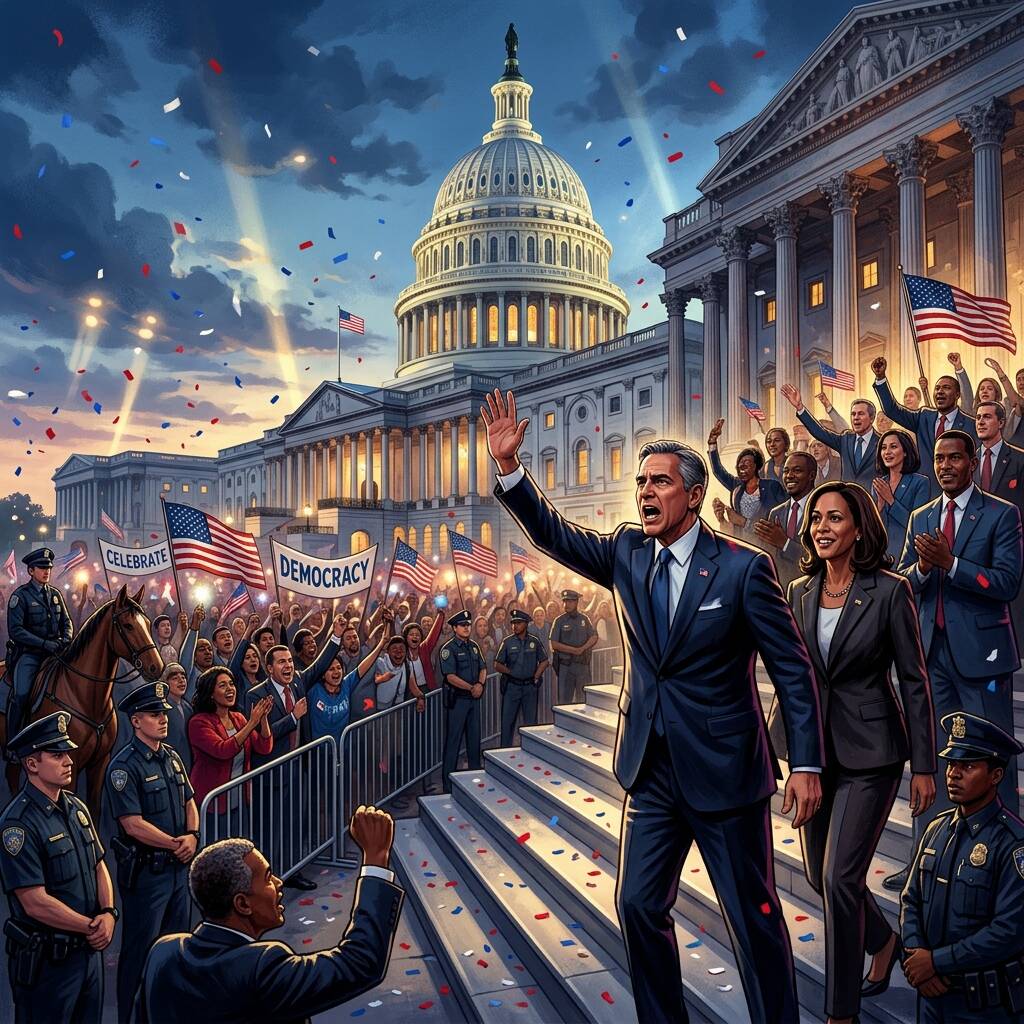
The United States is experiencing heightened political tension following former President Donald Trump's "Freedom 250" celebration, an event intended to mark the semiquincentennial of the nation but which quickly devolved into a fiercely debated political spectacle. As the 2026 election cycle heats up, this event has become a microcosm of the deeper divisions fracturing the American electorate. What was billed as a unifying national celebration has instead underscored the profound ideological schisms that continue to shape US politics.
The Genesis of the Controversy
The "Freedom 250" event was conceived as a massive, privately funded alternative to the official government-sponsored 250th-anniversary celebrations. The former president positioned the event as a reclaiming of American heritage from what he described as "woke" historical revisionism. The initial lineup boasted a roster of prominent country music stars, conservative commentators, and historical reenactments focusing on the Founding Fathers.
However, the event began unraveling weeks before it took place. Several high-profile artists, including Martina McBride and Bret Michaels, withdrew from the lineup, citing concerns over the increasingly partisan nature of the event and the divisive rhetoric surrounding its promotion. The withdrawal of these mainstream acts forced the organizers to pivot, ultimately positioning the former president himself as the headline act.
The Event as a Political Rally
By the time the event took place on the National Mall, any pretense of a non-partisan historical celebration had vanished. The crowd, numbering in the tens of thousands, was overwhelmingly composed of the former president's most ardent supporters. The speeches, rather than focusing on the shared history of the past 250 years, were laser-focused on the grievances of the present and the impending 2026 midterm elections.
The headline address was a fiery, two-hour speech that touched upon familiar themes: claims of a "weaponized" justice system, harsh criticism of the current administration's economic and foreign policies, and a renewed pledge to "drain the swamp." Critics immediately seized upon the event, with prominent media outlets like The Atlantic labeling it a "fiasco" and a "Day of Trump" rather than a day for America.
The 'Ice Barbie' Fiasco
Further complicating the event was the bizarre "Ice Barbie" controversy that erupted in the days leading up to the celebration. A proposed merchandise line featuring a doll resembling the former president's daughter, outfitted in tactical gear and branded as "Ice Barbie," drew intense backlash from both sides of the aisle. The tone-deaf nature of the merchandise, coupled with potential trademark infringement issues, forced a humiliating, last-minute cancellation of the product line.
The incident was widely mocked on late-night television and provided endless fodder for social media critics, overshadowing the organizers' attempts to project an image of strength and unity. It served as a stark reminder of the chaotic and often unpredictable nature of the political movement surrounding the former president.
Broader Political Implications
The "Freedom 250" event and its chaotic execution highlight the ongoing struggle within the Republican Party. While the populist wing remains intensely loyal to the former president, traditional conservatives are increasingly vocal about their unease. Former Vice President Mike Pence seized upon the moment to warn against the party's populist drift, arguing that it risks alienating moderate voters and abandoning core conservative principles.
Meanwhile, Democrats have capitalized on the event, framing it as evidence of the opposition's extreme and chaotic nature. They are using the imagery and rhetoric from the rally in targeted advertisements for the 2026 midterms, aiming to energize their own base and sway crucial independent voters in suburban swing districts.
Conclusion
The "Freedom 250" celebration will likely be remembered not as a unifying historical milestone, but as a defining moment in the deeply polarized political landscape of 2026. It perfectly encapsulated the era: highly partisan, deeply controversial, and inextricably linked to the persona of a single political figure. As the nation moves closer to the crucial midterm elections, the echoes of this event will continue to reverberate, a stark reminder of the profound divisions that must be navigated in the years to come.
The international reaction to the "Freedom 250" event further illustrates its significance. Foreign diplomats and international media observed the spectacle with a mixture of fascination and concern, viewing it as a stark indicator of American domestic instability. In an era where global challenges require a unified and predictable United States, the intense polarization on display at the National Mall sends a troubling message to both allies and adversaries. Furthermore, the event's heavy reliance on alternative media and its outright rejection of mainstream historical narratives reflect a deeper epistemic crisis within the country. When a significant portion of the electorate operates with a fundamentally different understanding of the nation's past and present, finding common ground on policy solutions becomes exceedingly difficult. The "Freedom 250" was more than just a rally; it was a powerful demonstration of the fractured reality in which American politics now operates, setting a volatile stage for the electoral battles ahead.
Comments
Post a Comment